Regulatory Differences Between API and Intermediate Manufacturing: A Practical Guide
Regulatory differences between API and intermediate manufacturing under ICH Q7, FDA, EMA, and NMPA. GMP boundaries, DMF filing, starting material justification.
Finerenone drug class: third‑generation non‑steroidal MRA. Compare selectivity, potency, half‑life, and safety vs spironolactone/eplerenone. FDA‑approved for CKD+T2D and HF with LVEF ≥40%.
Finerenone mechanism of action: a non‑steroidal mineralocorticoid receptor antagonist with high MR selectivity, balanced cardiorenal distribution, no active metabolites, and lower hyperkalemia risk vs steroidal MRAs.
Clascoterone vs minoxidil: Compare mechanisms, Phase 3 trial data, side effects, and whether they work better together. Evidence-based overview for hair loss.
Finerenone vs spironolactone: head-to-head real-world data shows finerenone has 69% lower mortality, 53% fewer kidney events, and less hyperkalemia. Nonsteroidal MRA with no hormonal side effects.
Clascoterone for hair loss: Phase 3 trials show significant regrowth with minimal systemic absorption. How it works, side effects, and comparison to finasteride.
Does GLP-1 cause hair loss? Yes, studies on 1.1M+ patients show an association—driven by rapid weight loss, not direct drug toxicity. Telogen effluvium is temporary. New oral drug Foundayo (orforglipron) included.
Comparing orforglipron vs tirzepatide: tirzepatide shows greater weight loss (-20.9% vs -12.4%), but orforglipron offers oral dosing, easier manufacturing, and potential for better long-term adherence.
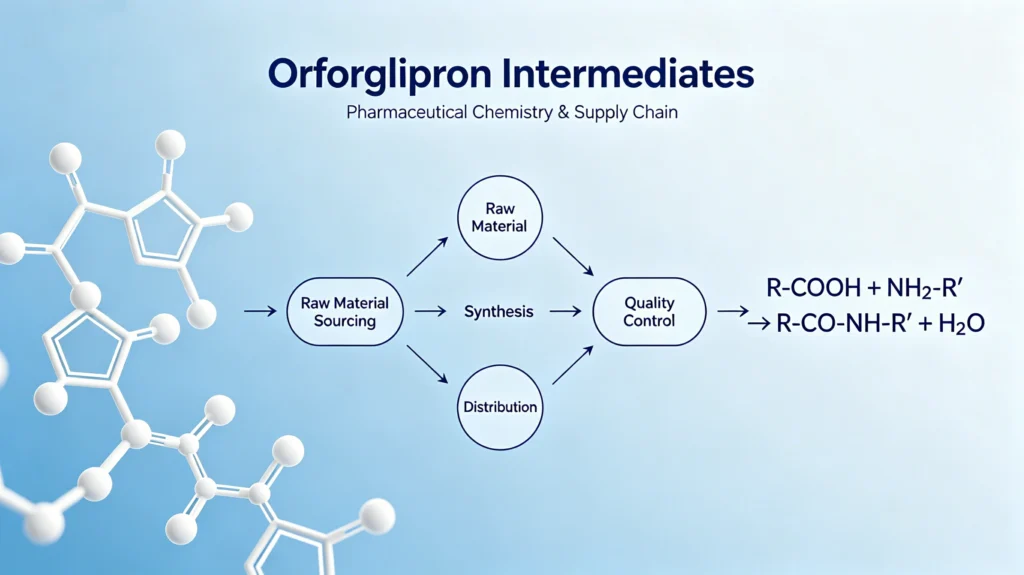
Looking for orforglipron for sale? This guide covers critical quality attributes—chiral purity, impurity control, and cGMP compliance—for sourcing GLP-1 intermediates. Learn what to ask suppliers before you buy.
This article elucidates the mechanism of action of GLP-1, the clinical data—including real-world efficacy and side effects—of drugs approved as of 2025 and novel oral therapies, their applicable patient populations, and their impact on the pharmaceutical supply chain.