Essential Certificate of Origin Checks Most Buyers Miss
A certificate of origin states where the drums were made — and nothing else. Which version your shipment needs, and the checks that keep it from stalling at customs.

A certificate of origin states where the drums were made — and nothing else. Which version your shipment needs, and the checks that keep it from stalling at customs.
A certificate of analysis shows numbers; a certificate of conformity shows confidence. Which one your shipment actually needs depends on the decision someone downstream is going to make with it.
Batch and lot can point at the same drums and still disagree on paper. Seven places where the two identifiers split, and the one line worth writing down before the truck leaves.
An OOS investigation on incoming material is a decision process, not a verdict on the batch. This guide walks the buyer’s path: freeze the lot, separate laboratory error from material failure, retest within the rules, and know when a third-party result is worth paying for.
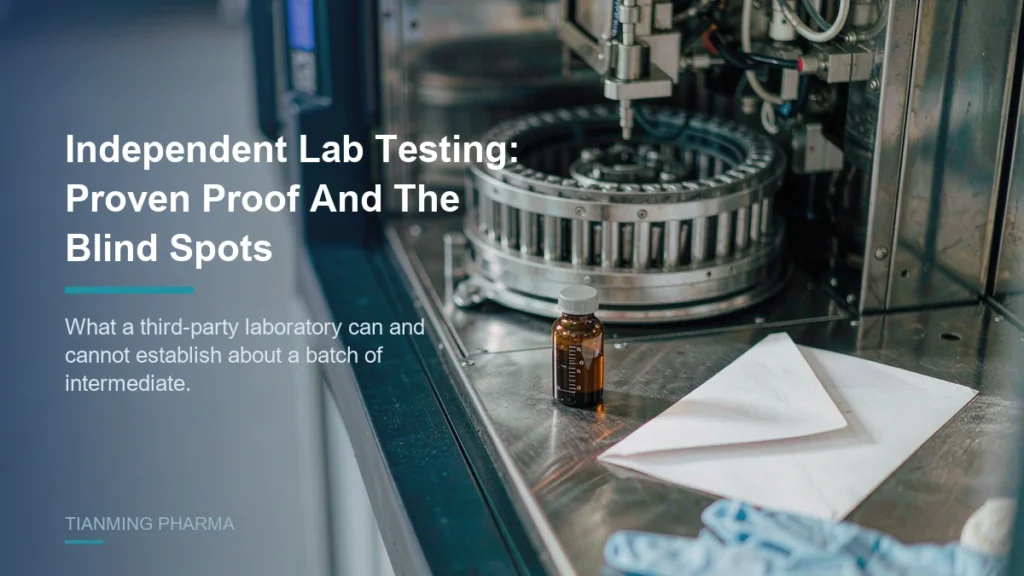
Independent lab testing settles a dispute between two results, but only if the method and the standard were agreed before the sample left the building. It cannot confirm sample integrity, and it cannot vouch for a process it never saw.
The first commercial batch from a new intermediate supplier is not a formality. Here is the checklist, the five approval outcomes, and how to log the call.
The first commercial batch from a new intermediate supplier is not a formality. Here is the checklist, the five approval outcomes, and how to log the call.
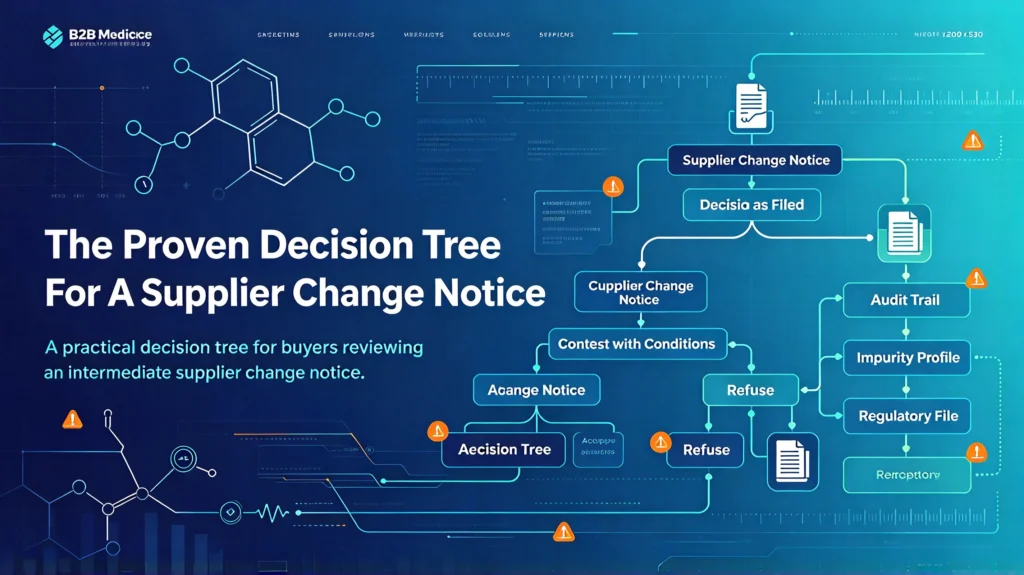
A buyer-side decision tree for handling an intermediate supplier change notice — what to accept, contest, or reject, and how to log the call.
A supplier discontinuation is a deadline, not just bad news. The questions to ask in writing, the last-time-buy calculation, and the files to collect in time.
Rejected batch? What to do in the first hour, how to write the notice, who pays the costs, and the escalation path when a supplier stalls.
