Proven Checks Buyers Miss In A Batch Manufacturing Record
The first commercial batch from a new intermediate supplier is not a formality. Here is the checklist, the five approval outcomes, and how to log the call.
If you landed here searching for “orforglipron for sale,” I’m going to guess you’re not a patient looking for a prescription. More likely, you’re a drug developer, a procurement lead, or a formulation scientist who needs this intermediate—and you need it from someone who actually knows what they’re doing.
I’ve been a process chemist at Tianming Pharmaceutical for over a decade. We specialize in complex intermediates, and orforglipron has been a big focus for us over the past few years.
I’ve worked on the synthesis, the scale-up, and the headaches that come with getting this molecule right. So let me walk you through what this compound is, why its intermediates are tricky, and—most importantly—what you should ask before placing an order.
Orforglipron (also called LY3502970) is the first non-peptide, small-molecule GLP-1 agonist to make it through late-stage trials. Unlike injectables like semaglutide, this one comes in a daily pill. No cold chain. No complicated formulation with absorption enhancers. Just a small molecule you can manufacture with standard chemical processes.
The Phase 3 ATTAIN-1 trial was published in The New England Journal of Medicine in 2025. The numbers are pretty striking:
Dose | Mean Weight Loss (72 weeks) | % Achieving ≥10% loss |
6 mg | 7.5% | not reported |
12 mg | 8.4% | not reported |
36 mg | 11.2% | 55% |
This isn’t just another weight-loss candidate. It’s a signal that oral small molecules can compete with biologics in metabolic disease—and that changes the game for manufacturing.
I’ve scaled up intermediates for GLP-1 drugs before. Orforglipron is different because it’s not a peptide. That sounds simpler, but it comes with its own set of challenges.
Critical Quality Attribute | Typical Requirement | Why It’s Important |
Enantiomeric Purity | >99.9% ee | Directly affects API activity |
Total Impurities | <0.5% | Saves downstream purification cost |
Residual Solvents | ICH Q3C limits | Required for safety and filing |
Genotoxic Impurities | <1 ppm where applicable | Non-negotiable for regulators |
If you’re evaluating suppliers, here’s what I’ve learned to look for—from both sides of the audit table.
We started working on orforglipron intermediates back in 2021. Here’s what we’ve built out since then:
If you’re searching for “orforglipron for sale,” you’re probably at a critical stage—maybe preclinical, maybe Phase 3, maybe getting ready for launch. The supplier you choose now will affect your timeline, your filing, and your cost structure for years.
The difference between a vendor and a partner often comes down to what happens when things go wrong. Do they share data transparently? Do they flag issues before they become problems? Do they understand what you actually need for your filing, not just what’s on the purchase order?
We’ve made orforglipron intermediates a strategic focus because we think this molecule represents a real shift in how GLP-1 therapies are delivered. And we think the teams that succeed with it will be the ones who choose partners carefully—starting with the intermediates.
If you’re evaluating options, I’d be happy to share more technical details: our impurity profiles, our process validation reports, or a sample batch to test in your own lab. You can reach us through the website or ask for our technical package directly.
We specialize in cGMP intermediates for next-generation oral GLP-1 drugs, including orforglipron. For specific questions about quality, documentation, or supply timelines, feel free to contact our technical team.
sunqian0123@gmail.com
+86 176 6371 3557
The first commercial batch from a new intermediate supplier is not a formality. Here is the checklist, the five approval outcomes, and how to log the call.
The first commercial batch from a new intermediate supplier is not a formality. Here is the checklist, the five approval outcomes, and how to log the call.
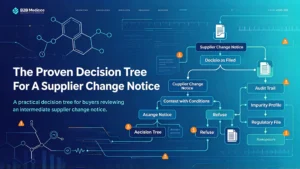
A buyer-side decision tree for handling an intermediate supplier change notice — what to accept, contest, or reject, and how to log the call.

Manufacturer and supplier of pharmaceutical APIs and intermediates. Contact us for technical support and sourcing solutions.