Cardiovascular diseases (CVDs) remain one of the leading causes of death worldwide. According to data released by the World Health Organization (WHO) in 2023, cardiovascular diseases cause approximately 17.9 million deaths annually, accounting for 32% of all global deaths.
Consequently, the market demand for cardiovascular drug intermediates, a critical upstream component, has expanded significantly.
Today, based on publicly available data, regulatory guidelines, and industry research reports, we will comprehensively analyze the key compound types, market trends, and supply chain demands of cardiovascular drug intermediates, providing decision-making support for procurement, R&D, and CDMO partners.
Why is the Demand for Cardiovascular Drug Intermediates Continuously Growing?
1.High global incidence of cardiovascular diseases drives drug demand
Cardiovascular drugs, represented by antihypertensives, lipid-lowering drugs, and antithrombotic drugs, are one of the most stable and continuously growing markets globally.
According to the IQVIA “Global Use of Medicines 2023” report, global sales of cardiovascular system drugs exceeded US$160 billion in 2022–2023, and are expected to maintain a compound annual growth rate (CAGR) of 3–6% until 2027.
The core structures of these drugs often require complex chemical intermediates, occupying a critical position in multi-step synthesis routes.
2.Novel targeted drugs drive demand for complex intermediates
In recent years, several innovative cardiovascular drugs have been launched or entered late-stage clinical trials, such as:
- PCSK9 inhibitors
- SGLT2 inhibitors for the treatment of heart failure and myocardial infarction complications
- ARNI (such as sacubitril/valsartan) becoming a cornerstone of new-generation heart failure treatment
These varieties typically involve complex intermediate processes such as multi-functional groups, asymmetric synthesis, chiral resolution, and catalytic hydrogenation, driving the demand for high-value-added intermediate suppliers.
3.API migration to Asia brings new supply chain layouts
According to CPhI Insights 2022 data, the Asian region, especially China and India, accounts for more than 60% of the global API and intermediate production share. As Europe and the US strengthen their supply chain diversification strategies, more and more pharmaceutical companies are seeking intermediate partners with GMP certification, scalability, and compliance capabilities, leading to increased market demand.
Key Categories and Representative Compounds of Cardiovascular Drug Intermediates
Cardiovascular system drugs cover multiple therapeutic areas, including antihypertensives, lipid-lowering agents, antithrombotics, anti-heart failure drugs, and antiarrhythmics. Their core intermediates can be independently categorized as follows:
1.Statin Drug Intermediates
Statins remain the most widely used lipid-lowering drugs globally. Their synthesis routes typically include:
- Transesterification reactions
- Asymmetric catalysis
- Grignard reagent addition
Construction of lactone structures
Common intermediates include:
- (R)-3-Hydroxybutyrolactone (used for atorvastatin)
- Lactone Intermediates (used for rosuvastatin)
- Fluoroaryl intermediates (used for pitavastatin)
Demand driver: Long-term sustained demand for cardiovascular disease prevention and treatment globally.
2.ARB (Angiotensin II Receptor Blocker) Intermediates
Representative drugs: Telmisartan, Valsartan, Irbesartan, Olmesartan, etc.
- Characteristics of ARB intermediates:
- Multi-step condensation
- Construction of benzimidazole and tetrazole structures
Requires strict control of impurities (especially NDMA-type impurities, which have received attention in recent years)
Typical intermediates include:
- Tetrazole intermediates
- Biphenyl-4-carboxylic acid derivatives
Demand driver: The number of hypertension patients worldwide continues to grow (WHO 2023 data: over 1.2 billion people).
3.Antithrombotic Drug Intermediates
Including anticoagulants and antiplatelet drugs, such as:
- Clopidogrel
- Ticagrelor
- Rivaroxaban
- Apixaban
Related intermediates usually have:
- Chiral resolution requirements
- Multiple nitrogen-containing heterocyclic rings
- Gradient crystallization, multi-stage purification
Such as the key intermediate for rivaroxaban, 5-Chloro-2-methoxy-4-nitroaniline.
Demand driver: Significant global increase in diseases such as myocardial infarction, stroke, and atrial fibrillation.
4. Anti-Heart Failure and Multi-Target Drug Intermediates
Such as sacubitril/valsartan (Entresto). Their intermediates often feature:
- Large molecular structures
- Asymmetric catalysis or enzyme catalysis requirements
- Strict chiral control
Demand driver: The number of heart failure patients is increasing annually (AHA 2022 estimates approximately 6.4 million people in the US have heart failure).
Cardiovascular Drug Intermediate Market Trends and Supply Chain Requirements
1.Stricter Impurity Control Requirements
Especially after the NDMA impurity incident, global regulatory agencies have strengthened their scrutiny of intermediate purity and process routes.
The FDA and EMA both require:
- Full-process impurity mapping
- Process residue control
- Stability evaluation
- Full lifecycle quality management (ICH Q12)
Intermediate suppliers need to have a complete QA/QC system.
2.Customers are increasingly focusing on supplier scale-up and production stability
Overseas pharmaceutical companies generally require:
- Multi-ton reaction vessels
- Scale-up history records
- Audit trail
- Change control capabilities
This places higher demands on the supplier’s engineering capabilities.
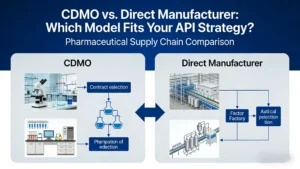
3.CDMO model accelerates the growth of intermediate demand
Multiple innovative drug projects globally are entering clinical trials, driving the growth of intermediate demand from kilograms to tons.
The cooperation model between CDMOs and intermediate manufacturing companies is becoming more stable and long-term.
Key Indicators for Selecting Cardiovascular Drug Intermediate Suppliers
For pharmaceutical companies, evaluating intermediate suppliers requires focusing on the following capabilities:
- Scale-up and Commercial Production capabilities
Including reaction vessel capacity, continuous flow, hydrogenation, and other process capabilities.
Whether it meets ICH and GMP requirements, and whether it has consistent batch production experience.
- Process Development and Optimization Capabilities (R&D Strength)
- Raw material supply chain management
- Auditing and compliance capabilities
- Long-term supply stability
Conclusion: The Cardiovascular Drug Intermediate Market Will Continue to Grow
Therefore, we can conclude that against the backdrop of continuously expanding global demand for cardiovascular disease drugs, the market demand for cardiovascular drug intermediates will continue to maintain strong growth.
If you are looking for a reliable partner for cardiovascular drug intermediates, please visit our product lists.
Email: suqnian0123@gmail.com
WhatsApp: +86 17663713557