Having spent many years in the pharmaceutical intermediates industry, I have closely monitored the key trends within the global landscape of diabetes and weight-loss medications.
I have personally witnessed GLP-1 class drugs transform from niche hypoglycemic agents into a global phenomenon—blockbusters that have achieved a level of market traction and rapid iteration far exceeding initial industry expectations.
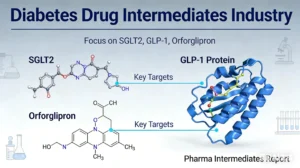
Of particular note is Orforglipron—an oral small-molecule GLP-1 receptor agonist developed by Eli Lilly. By breaking down the traditional barriers associated with injectable medications, it has emerged as the most closely watched investigational drug in the current metabolic disease sector.
This development has, in turn, directly fueled a rapid surge in downstream demand for high-quality intermediates used in the production of diabetes medications.
Today, drawing upon publicly available clinical data and years of practical industry experience, I would like to discuss the fundamental differences between the two core classes of hypoglycemic drugs—SGLT2 inhibitors and GLP-1 receptor agonists.
Furthermore, against the backdrop of the Orforglipron-driven market boom, I will explore the strategic rationale behind selecting diabetes drug intermediates and the core value propositions within this space.
SGLT2 vs. GLP-1: Key Distinctions in the Two Major Diabetes and Weight-Loss Segments
Within the industry, R&D personnel at pharmaceutical companies and their CDMO partners frequently conflate SGLT2 inhibitors with GLP-1 receptor agonists.
While both appear to fall under the broad umbrella of diabetes and weight-loss therapies, their therapeutic targets, clinical positioning, and manufacturing processes are entirely distinct. Consequently, the requirements for their corresponding intermediate R&D and supply chains differ vastly.
Based on global clinical applications and publicly available R&D data, these two classes of drugs currently serve as the twin pillars for the treatment of Type 2 diabetes and obesity.
They address distinct patient populations and represent the core strategic focus of our own efforts in the pharmaceutical intermediates sector; only by clearly distinguishing between the two can we precisely match them with the appropriate intermediate products.
Drug Class | Core Mechanism of Action | Key Clinical Advantages | Representative Drugs |
SGLT2 Inhibitors | Blocks renal glucose reabsorption, expelling excess sugar directly through urine; glucose-lowering effect is independent of pancreatic beta-cell function | Stable glycemic control with low hypoglycemia risk, proven cardiovascular and renal benefits, oral administration, and well-established safety profiles | Dapagliflozin, Empagliflozin, Canagliflozin |
GLP-1 Receptor Agonists | Mimics endogenous GLP-1, regulating blood glucose glucose-dependently, suppressing appetite, and delaying gastric emptying for dual diabetes and weight control | Superior weight loss alongside effective glycemic control, broad patient eligibility, and rapid innovation from long-acting injections to oral formulations | Semaglutide, Tirzepatide, Orforglipron (Phase III) |
Orforglipron: A Disruptive Breakthrough in the GLP-1 Landscape
Most existing mainstream GLP-1 medications are in injectable form. The few oral peptide-based products currently on the market suffer from significant drawbacks, including low absorption efficiency and stringent administration requirements—specifically, the need to be taken on an empty stomach, with a large volume of water, and followed by a prolonged fasting period.
Consequently, long-term patient adherence to these regimens is extremely low; this represents a core bottleneck that the industry has been striving to overcome for years.
Orforglipron stands as the world’s first oral small-molecule GLP-1 drug to successfully complete Phase III clinical trials. Data released by Eli Lilly from these trials demonstrate that, in addition to significantly lowering glycated hemoglobin (HbA1c) levels in patients with Type 2 diabetes, the high-dose group achieved an average weight loss of nearly 8% after 40 weeks of standardized treatment.
Its core advantage directly addresses the industry’s pain points: it can be taken at any time of day, requires no dietary restrictions, and imposes no special water intake requirements.
By completely eliminating the usage limitations associated with traditional GLP-1 medications, it promises to significantly boost patient adherence. The launch of this medication marks the GLP-1 market’s official entry into the era of small-molecule oral therapies.
Compared to peptide-based GLP-1 drugs, small-molecule oral formulations face lower production barriers and are more amenable to industrialized, large-scale mass production.
Crucially, pharmaceutical intermediates—characterized by high purity, process stability, and strict impurity compliance—are the decisive factors determining the synthesis yield of active pharmaceutical ingredients (APIs), the purity of the finished drug product, and overall production costs.
These intermediates represent a core supply chain requirement for pharmaceutical companies and CDMOs as they advance projects and vie for market share—a fundamental reason why we proactively established our strategic presence in the field of small-molecule GLP-1 intermediates.
Selecting Diabetes Drug Intermediates: Precision Alignment Far Outweighs Low-Price Compromises
Whether dealing with commercially mature SGLT2 inhibitors or the rapidly booming GLP-1 drug series (including Orforglipron), the selection of pharmaceutical intermediates must never be based solely on price.
Instead, it must strictly align with the core, non-negotiable requirements of drug R&D and mass production: purity levels that meet international standards (such as the USP and EP), synthesis processes that are stable and controllable, and impurity levels that strictly adhere to regulatory limits.
This approach serves to prevent critical issues caused by substandard intermediates—such as API synthesis failures, excessive impurities in finished drugs, R&D delays, and skyrocketing mass production costs.
With years of deep expertise in the field of anti-diabetic and weight-loss drug intermediates, we have strategically positioned ourselves to provide core intermediates for SGLT2 targets and key intermediates for small-molecule GLP-1 drugs.
Our products are perfectly tailored to support the entire lifecycle of current oral GLP-1 drugs—from laboratory-scale trials and pilot studies to full-scale industrial mass production.
Leveraging mature processes and a rigorous quality control system to ensure product stability, we empower pharmaceutical companies to shorten R&D cycles, reduce mass production costs, and rapidly capitalize on the market window opened by Orforglipron.
We do not offer generic, one-size-fits-all products; instead, we provide precise supply chain support that is meticulously aligned with the specific project requirements of our clients.
A Concluding Note: The Foundation of Blockbuster Drugs Lies in High-Quality Upstream Intermediates
As the global populations affected by Type 2 diabetes and obesity continue to rise, the market for metabolic disease medications is expanding steadily year after year.
The evolution of GLP-1 drugs—transitioning from injectable to oral formulations—represents far more than a simple upgrade in dosage form; it signifies a comprehensive breakthrough in market penetration.
Across the entire pharmaceutical value chain, the successful launch of any blockbuster innovative drug relies inextricably on the robust support of high-quality upstream intermediates; indeed, the quality and compatibility of these intermediates directly determine the ultimate success or failure of both drug R&D and mass production.
Drawing upon publicly available clinical data and authentic industry trends, we provide pharmaceutical companies and CDMOs—specifically those strategically positioned in the SGLT2 and GLP-1 drug sectors—with highly compatible intermediates for diabetes medications, thereby directly addressing critical supply chain pain points encountered during R&D and manufacturing.
If you are currently advancing R&D or mass production projects for oral small-molecule GLP-1 drugs or classic SGLT2 medications, precise intermediate selection can help you avoid costly detours, significantly boost the efficiency of both R&D and production, and enable you to firmly seize the opportunities presented by the current golden era of metabolic disease therapeutics.
Email: sunqian0123@gamil.com