In the pharmaceutical and chemical industry, the synthesis yield and purity of Active Pharmaceutical Ingredients (APIs) and their intermediates directly determine the production cost, clinical safety, and feasibility of industrial production of drugs.
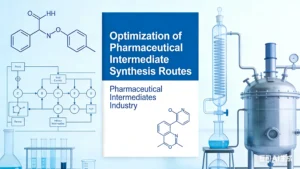
As a core link in the R&D of drug synthesis processes, route optimization can effectively reduce by-product formation, shorten reaction cycles, and improve the yield and purity of target products through systematic adjustments to key factors such as reaction raw materials, solvent selection, catalytic systems, and reaction steps.
This is also a research focus for global pharmaceutical enterprises and research institutions. Based on published academic literature and patent achievements, this article takes two typical APIs—the antiviral drug baloxavir marboxil and the antitumor drug ibrutinib—as core cases to analyze the specific applications, technical paths, and practical effects of route optimization in improving yield and purity.
All case data are derived from traceable public research results, providing a reference for process R&D in the pharmaceutical and chemical field.
Core Value of Route Optimization: The Key Bridge from Laboratory to Industrialization
The initial route of drug synthesis often only meets the needs of product preparation in small-scale laboratory tests, with problems such as harsh reaction conditions, excessive by-products, low yield, and difficulty in meeting purity standards—making it unsuitable for direct application in industrial production.
With green chemistry and industrial feasibility as its core principles, route optimization achieves three key goals through the redesign of synthetic routes, precise regulation of reaction parameters, and scientific screening of reagents and solvents: first, improving the yield of target products and reducing raw material loss; second, enhancing product purity and reducing purification processes and costs; third, optimizing reaction conditions to align the process more closely with the safety and efficiency requirements of large-scale production.
https://pubs.acs.org/doi/10.1021/acssuschemeng.1c06844, such as continuous flow synthesis and catalytic system optimization, can reduce energy consumption in the synthesis of pharmaceutical intermediates by 97% while significantly decreasing the use of organic solvents and waste emissions—achieving process sustainability while improving yield.
In actual industrial production, every 1 percentage point increase in yield can reduce raw material costs by millions of yuan for API manufacturers, and improved purity directly reduces drug quality risks. This is the fundamental reason why route optimization has become a core research direction in the pharmaceutical and chemical field.
Case Study 1: Optimization of the Synthetic Route of Baloxavir Marboxil, Achieving Dual Breakthroughs in Yield and Optical Purity
As a new-generation anti-influenza virus API, baloxavir marboxil is one of the core products in Tianming Pharmaceutical’s antiviral drug product line, and optimizing its synthetic process has long been a research hotspot in the industry. The traditional synthetic route suffers from problems such as long reaction times, low optical purity, and insufficient intermediate yields, which restrict the efficiency of industrial production.
Specifically, research results published in Chinese Journal of Medicinal Chemistry—a core domestic journal in the pharmaceutical field—have systematically optimized the total synthetic route of baloxavir marboxil, achieving significant process improvements.
Building on the research published in Chinese Journal of Medicinal Chemistry, researchers optimized the preparation method of the key intermediate compound 4 by adjusting the temperature and feed ratio of the esterification and hydrazinolysis reactions, increasing its yield from 77.00% (in the traditional process) to 82.44%—directly improving the raw material utilization rate of subsequent reactions.
For the synthesis of compound 8, the traditional solvent system was abandoned, and 2-methyltetrahydrofuran was selected as the solvent. This not only reduced the dosage of the key raw material compound 7 but also shortened the reaction time from 24 hours to 6 hours, greatly boosting production efficiency.
In the synthesis of the target product, the Mitsunobu reaction was adopted instead of the traditional reaction system to synthesize compound 13, effectively addressing the industry pain point of low optical purity.
This adjustment increased the diastereomeric excess (de) of baloxavir marboxil from 52.70% to 98.46%, with the HPLC purity of the final product reaching 99.59% and a stable total yield of 15.70%—consistent with the findings reported in the journal.
Another core advantage of this optimized route is its simple purification operation and mild reaction conditions. It abandons some high-temperature and high-pressure reaction requirements of the traditional process and reduces the use of toxic and harmful solvents—lowering both the equipment investment and safety risks of industrial production while aligning with the industry trend of green pharmaceutical manufacturing.
This provides a feasible process plan for the large-scale production of baloxavir marboxil.
Case Study 2: Optimization of the Synthetic Route of Ibrutinib, Solving the By-Product Problem and Improving Product Purity
As a Bruton’s Tyrosine Kinase (BTK) inhibitor, ibrutinib is a core antitumor API for the clinical treatment of B-cell lymphoma and an important part of Tianming Pharmaceutical’s antitumor product line.
In the traditional ibrutinib synthetic route, the amino group on the pyrimidine ring is not effectively protected, leading to the easy formation of difficult-to-purify by-products during the Mitsunobu reaction and acryloyl chloride condensation steps. This results in low final product purity and limited yield, which has become a core bottleneck in industrial production.
To address this issue, the invention patent published by the State Intellectual Property Office (CN 116063309 A) designed a new synthetic route for ibrutinib.
The core innovation lies in the BOC protection of the amino group on the pyrimidine ring, which fundamentally prevents the formation of by-products during the Mitsunobu reaction and acryloyl chloride condensation. Additionally, researchers prepared 1,1′-(azodicarbonyl)bis(tetrahydroindole) as the Mitsunobu reaction reagent, replacing traditional reagents such as diethyl azodicarboxylate.
This significantly improved the yield of the Mitsunobu reaction step and further increased the total yield of the final product.
In the subsequent deprotection and acylation steps, the optimized route precisely regulates the reaction temperature and feed molar ratio: the amino deprotection reaction is controlled at 20-30℃, and mild hydrogen donors such as ammonium formate and cyclohexadiene are selected to avoid high-temperature damage to the product structure; the acylation reaction is carried out at 0-10℃, with the feed molar ratio of the ibrutinib intermediate to acryloyl chloride controlled at 1.0:1.2~1.5.
This not only ensures the reaction proceeds fully but also reduces impurity contamination caused by excessive reagents.
After process optimization, the product purity of ibrutinib is greatly improved, with easily available and low-cost starting materials and mild reaction conditions—completely resolving the problem of difficult by-product purification in the traditional process, achieving a balance of high purity and high yield, and laying a process foundation for the commercial large-scale production of ibrutinib.
General Strategies and Industry Trends of Route Optimization
From the two typical cases above, it is evident that drug synthesis route optimization is not a single-link adjustment but a set of systematic process improvement plans.
Its core general strategies can be summarized into three points: first, precise protection of key functional groups (e.g., BOC amino protection in ibrutinib synthesis), which reduces side reactions at the source;
second, scientific screening of reaction systems, including the replacement of solvents, catalysts, and reaction reagents (e.g., the use of 2-methyltetrahydrofuran in baloxavir synthesis and the application of self-made Mitsunobu reaction reagents);
third, precise regulation of reaction parameters, adjusting temperature, feed ratio, and reaction time to direct the reaction toward target product formation and reduce by-products.
From an industry development perspective, route optimization is becoming deeply integrated with new technologies such as continuous flow synthesis, green catalysis, and molecular simulation.
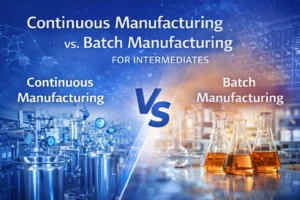
Studies by ACS Publications show that compared with traditional batch synthesis, continuous flow synthesis offers better mass and heat transfer effects in API production, making the reaction more controllable and the yield and purity more stable.
Meanwhile, studies published in PubMed use molecular simulation technology to design ibrutinib cocrystals, which not only improves its oral bioavailability but also provides molecular-level theoretical guidance for synthetic route optimization.
The integration of these new technologies has transformed route optimization from “empirical adjustment” to “precision design,” making it the direction of development in the pharmaceutical and chemical field.
Conclusion
Drug synthesis route optimization is a core method for improving API yield and purity, as well as a key bridge connecting laboratory R&D and industrial production.
The optimization cases of baloxavir marboxil (based on research from Chinese Journal of Medicinal Chemistry) and ibrutinib (based on the State Intellectual Property Office patent) fully demonstrate that route optimization, grounded in published literature and patent achievements, can specifically address the pain points of traditional processes, achieving improvements in production efficiency, product quality, and industrial feasibility.
As an enterprise focused on the R&D, production, and supply of APIs and pharmaceutical intermediates, Tianming Pharmaceutical has always prioritized process optimization and technological innovation as its core development direction.
Relying on the research and application of cutting-edge synthetic technologies, it continuously upgrades the processes of its API products in fields such as antibiotics, cardiovascular diseases, diabetes, antitumor, and antiviral drugs—meeting the needs of the global pharmaceutical market with high-purity, high-yield products.
In the future, with the continuous development of technologies such as green pharmaceutical production and continuous flow synthesis, route optimization will play an even greater role in the pharmaceutical and chemical field, driving the industry toward greater efficiency, environmental friendliness, and sustainability.
All case data in this article are derived from the following traceable public literature/patents:
- Chinese Journal of Medicinal Chemistry (Vol. 32, Issue 4): Improved Synthetic Process of Anti-Influenza Virus Drug Baloxavir Marboxil (consistent with the research data cited in Case Study 1)
- State Intellectual Property Office Invention Patent CN 116063309 A: A Synthetic Method of Ibrutinib
- ACS Publications: Sustainability and Techno-Economic Assessment of Batch and Flow Chemistry in Seven Industrial Pharmaceutical Processes
- PubMed: Integrative Green Synthesis and Molecular Simulation of Ibrutinib Cocrystals for Enhanced Biopharmaceutical Performance and In Vivo Pharmacokinetics