
Ultimate First Article Approval Checklist For A New Supplier
The first commercial batch from a new intermediate supplier is not a formality. Here is the checklist, the five approval outcomes, and how to log the call.
Table of Contents
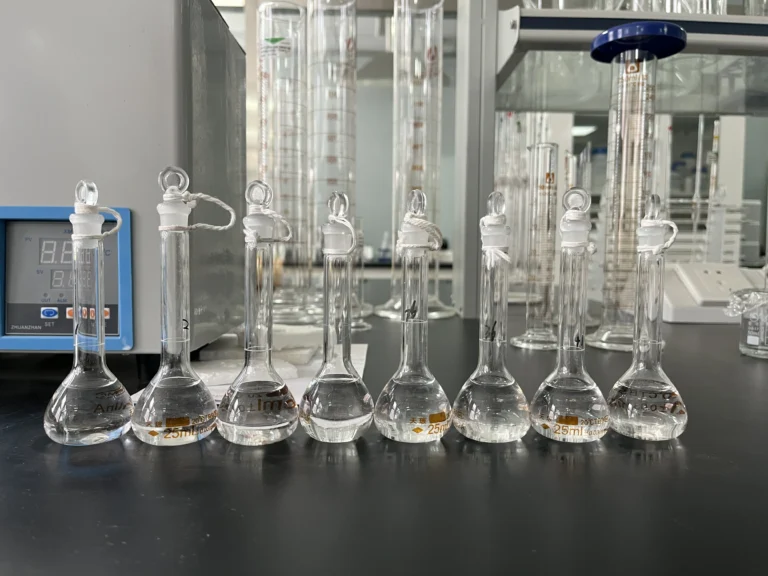
In pharmaceutical development, crystallization is often treated as a technical detail—a step to be adjusted once the chemistry works. For companies responsible for scaling intermediates from lab to commercial production, this assumption rarely holds true.
In reality, crystallization and solid-form behavior frequently determine whether an intermediate can be manufactured consistently, supplied reliably, and accepted by downstream API teams and regulators. Many late-stage delays, quality deviations, and reformulation efforts trace back not to the API itself, but to unresolved solid-state issues introduced much earlier.
From a manufacturing perspective, crystallization is not a finishing step. It is a risk-defining decision.
For intermediates, crystallization directly affects three outcomes that matter to drug developers:
Industry data show that crystallization remains the dominant purification method in pharmaceutical manufacturing, accounting for the majority of impurity removal steps (Mullin, Crystallization). When this step is unstable or poorly understood, impurity profiles fluctuate, physical properties drift, and downstream processes become harder—not easier—to control.
From our experience, once these issues appear at the API stage, correction becomes expensive and time-consuming. When addressed early at the intermediate level, they are often manageable.
Polymorphism: “Same Molecule, Different Behavior”
Many intermediates exist in multiple crystalline forms. While chemical identity remains unchanged, solubility, filtration behavior, and reactivity can vary significantly.
In real manufacturing projects, unintentional polymorphic shifts often occur during:
Published studies confirm that uncontrolled polymorphism is a leading cause of late-stage manufacturing challenges (Advanced Drug Delivery Reviews, Brittain, 2009). For clients, this often translates into unexplained variability between development batches and commercial supply.
Solvate or hydrate formation is another common issue during crystallization. These forms may appear acceptable at pilot scale but create complications during drying, storage, or long-term stability.
ICH Q3C emphasizes solvent-related risk when residual solvents impact quality or safety. From a manufacturer’s standpoint, once a solvate becomes embedded in the intermediate, eliminating it usually requires redesigning the crystallization strategy rather than adjusting operating parameters.
This is why experienced manufacturers focus on solvent systems with predictable scale-up behavior from the outset.
Clients often focus on chemical purity, yet crystal morphology frequently determines how smoothly a batch moves through filtration, centrifugation, and drying.
Needle-like or poorly formed crystals slow operations, increase deviation risk, and reduce plant efficiency. Research in Organic Process Research & Development demonstrates that controlled crystallization conditions significantly improve filterability and throughput (Myerson et al., 2015).
In commercial manufacturing, these improvements translate directly into more reliable supply.
A crystallization process that works in a flask may behave very differently in a reactor. Scale introduces factors such as mixing limitations, heat transfer gradients, and localized supersaturation.
FDA process validation guidance highlights the importance of understanding scale-dependent behavior. In practice, many “unexpected” issues observed during scale-up are not chemistry failures—they are solid-form control failures.
Manufacturers with limited crystallization experience often respond reactively. Experienced teams design stress-tested processes that tolerate realistic operating variability.
Robust manufacturers do not treat solid-state analytics as an afterthought. Techniques such as PXRD, DSC, and particle size analysis help detect early warning signs long before quality issues reach the API stage.
ICH Q6A supports defining physical attributes when they affect product quality. Even when intermediates are not formally specified for polymorphism, proactive characterization strengthens internal control and supports smoother regulatory interactions.
From a client’s perspective, the value of an intermediate manufacturer lies not in producing a single successful batch, but in delivering reproducible quality over time.
Manufacturers with mature crystallization capabilities typically:
These capabilities are developed through long-term project experience, not short-term investment.
Regulators increasingly examine how intermediate quality influences final API performance. During audits, questions often focus on impurity origins, process evolution, and physical form control.
A well-controlled crystallization process sends a strong signal: the manufacturer understands not only how to make the molecule, but how to make it reliably.
Crystallization and solid-form challenges for intermediates are no longer purely technical issues. They influence timelines, costs, regulatory outcomes, and long-term supply reliability.
Companies that treat crystallization as a strategic capability—rather than a troubleshooting step—reduce development risk and gain a measurable advantage. For drug developers, choosing a partner with proven crystallization expertise at the intermediate stage often determines whether a project progresses smoothly or encounters avoidable setbacks.
In today’s pharmaceutical environment, solid-form control is not optional. It is a foundation for trust.
Ready to Reduce Crystallization Risk at the Intermediate Stage?
In our experience, most solid-form issues are not caused by chemistry itself, but by decisions made too late in development. When crystallization behavior is evaluated early—at the intermediate level—many downstream risks can be avoided before they become costly obstacles.
If your project involves complex intermediates, polymorphism-sensitive compounds, or scale-up challenges, early technical alignment can make a measurable difference. Our team works closely with clients to assess crystallization risk, impurity behavior, and solid-form consistency from route design through commercial supply.
To discuss your intermediate requirements or explore technical solutions tailored to your project, please contact us.
Email: sunqian0123@gmail.com
WhatsApp: +8617663713557
Early conversations often prevent late-stage surprises.
References
The first commercial batch from a new intermediate supplier is not a formality. Here is the checklist, the five approval outcomes, and how to log the call.
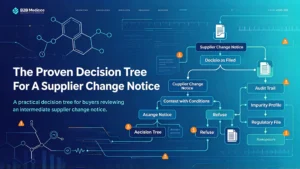
A buyer-side decision tree for handling an intermediate supplier change notice — what to accept, contest, or reject, and how to log the call.
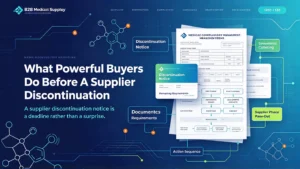
A supplier discontinuation is a deadline, not just bad news. The questions to ask in writing, the last-time-buy calculation, and the files to collect in time.

Manufacturer and supplier of pharmaceutical APIs and intermediates. Contact us for technical support and sourcing solutions.