Ultimate First Article Approval Checklist For A New Supplier
The first commercial batch from a new intermediate supplier is not a formality. Here is the checklist, the five approval outcomes, and how to log the call.
Have you heard of “prediabetes”? It is not diabetes, but it is just one step away from it. At this stage, fasting glucose is already elevated (100–125 mg/dL), but not high enough to meet the diagnostic criteria for type 2 diabetes. Globally, about 350 million people are stuck in this “grey zone” .
Even more concerning, prediabetes is not only the “reserve force” for diabetes but also an independent risk factor for cardiovascular disease. Although doctors always stress “eat less and move more,” in reality, the success rate of relying solely on lifestyle interventions is not ideal. Is there a simpler, more effective way to help hundreds of millions of people get back on track toward better health?
Recently, a study published in the international journal Frontiers in Nutrition titled “Impact of a food supplement containing Citrus limon L. Osbeck and Vitis vinifera L. extracts, hesperidin and chromium in combination with an isocaloric diet on glucose and lipid metabolism in subjects with impaired fasting blood glucose: a single-center, controlled, randomized, parallel-arm, double-blind clinical trial” reported that scientists from the University of Naples Federico II and other institutions found that a dietary supplement containing lemon extract, red grape extract, hesperidin, and chromium was able to restore fasting glucose to normal within 3 months and significantly improve lipid profiles within 6 months.
This was a randomized, double-blind, placebo-controlled clinical trial—the highest level of scientific evidence. A total of 62 subjects aged 18–75 with prediabetes were enrolled. All participants followed the physician-guided DASH diet, but half received the test supplement, and the other half received a placebo identical in appearance.
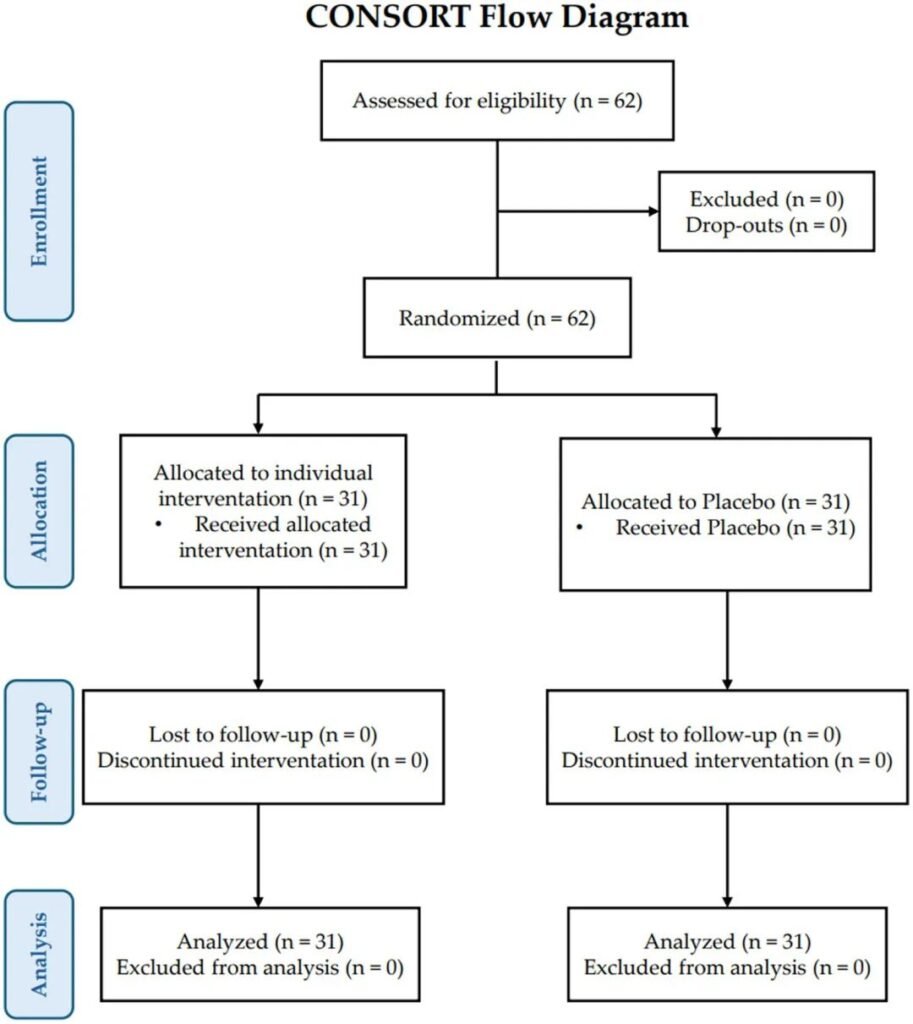
Clinical trial participant flowchart
The results were impressive. The metabolic indicators of the supplement group achieved a “qualitative leap”:
At 3 months, fasting glucose in the supplement group dropped from a baseline of 114 mg/dL to 95 mg/dL, returning directly to the normal range (<100 mg/dL). In contrast, the placebo group only decreased from 113 mg/dL to 111 mg/dL; even at 6 months, it fell only to 107 mg/dL, remaining within the prediabetic range.
At 6 months, lipid parameters improved dramatically:
LDL (“bad cholesterol”) in the supplement group dropped from 114 mg/dL to 73 mg/dL—well below the ideal value of <100 mg/dL;
HDL (“good cholesterol”) increased from 38 mg/dL to 56 mg/dL, reaching optimal levels;
Triglycerides decreased from 107 mg/dL to 93 mg/dL, showing steady improvement.
In contrast, the placebo group’s triglycerides not only failed to decrease but increased from 93 mg/dL to 112 mg/dL, with lipid metabolism continuing to worsen.
More importantly, during the entire intervention, safety indicators such as liver function (AST, ALT) and kidney function (creatinine) in the supplement group showed no abnormalities, demonstrating excellent tolerability and no burden during long-term use.
You may wonder—how can these common ingredients, when combined, produce such remarkable effects?
Researchers explained that the key lies in their “multi-pathway synergistic action,” not the effect of a single ingredient.
Lemon and red grape extracts are rich in flavonoids (such as hesperidin in lemon and anthocyanins in grapes), which improve insulin sensitivity and reduce metabolic disturbances through antioxidant and anti-inflammatory mechanisms;
Hesperidin, a major active component in citrus fruits, can directly inhibit intestinal glucose transporters, delay glucose absorption, regulate insulin signaling pathways, and improve glucose homeostasis;
Chromium, an essential trace mineral, is a core component of the glucose tolerance factor. It enhances the binding affinity between insulin and its receptors, promotes the translocation of the glucose transporter GLUT4 to the cell membrane to accelerate glucose utilization, and suppresses key enzymes involved in hepatic cholesterol synthesis, helping regulate lipid metabolism.
These ingredients work together from multiple angles—reducing glucose absorption, enhancing insulin action, and improving lipid metabolism—creating a synergistic effect that is more comprehensive than single-ingredient interventions.
What makes this study particularly noteworthy is not only its remarkable effectiveness but also the “high feasibility” it offers for prediabetes management.
For many people, long-term strict dietary control and regular exercise are extremely difficult. However, this supplement can deliver substantial improvements in metabolic markers atop normal healthy eating. It does not replace a healthy lifestyle—it becomes a “powerful booster,” significantly lowering the threshold for metabolic health management.
Of course, the researchers also acknowledged the study’s limitations: a relatively small sample size (62 participants), single-center design, and the exclusion of obese individuals with BMI ≥30. Future research needs to validate long-term effects in broader populations.
This study opens a new window for us: through scientifically formulated natural extracts, we may be able to manage prediabetes more easily and effectively, preventing hundreds of millions from progressing toward diabetes and cardiovascular disease.
As larger-scale research advances, such “natural ingredients + scientific formulation” supplements may become a routine intervention for prediabetes, helping more people safeguard their health with ease.
References:
Alessandro Di Minno,Maria Vittoria Morone,Daniele Giuseppe Buccato, et al. Impact of a food supplement containing Citrus limon L. Osbeck and Vitis vinifera L. extracts, hesperidin and chromium in combination with an isocaloric diet on glucose and lipid metabolism in subjects with impaired fasting blood glucose, a single-center, controlled, randomized, parallel-arm, double-blind clinical trial. Frontiers in Nutrition, 12. DOI: 10.3389/fnut.2025.1671102.
Disclaimer:
The content presented in this article is intended solely for academic communication, scientific discussion, and general informational purposes. It does not constitute medical advice, diagnosis, treatment recommendations, or professional health guidance. Any health-related decisions, including the use of supplements or dietary interventions, should be made in consultation with a qualified healthcare professional. The clinical findings referenced are based on published research and may not apply to every individual. The authors and publisher assume no liability for any actions taken based on the information provided in this article.
The first commercial batch from a new intermediate supplier is not a formality. Here is the checklist, the five approval outcomes, and how to log the call.
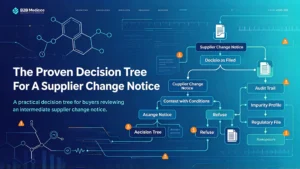
A buyer-side decision tree for handling an intermediate supplier change notice — what to accept, contest, or reject, and how to log the call.
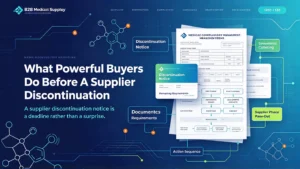
A supplier discontinuation is a deadline, not just bad news. The questions to ask in writing, the last-time-buy calculation, and the files to collect in time.

Manufacturer and supplier of pharmaceutical APIs and intermediates. Contact us for technical support and sourcing solutions.